
The Bloomz Blog
Ideas for connected, equitable schools
Featured
All articles
-
Product updates
Building Balanced Rec Teams: Evaluations, Buddy Requests and Coach's Kids
How league directors form fair recreational teams: run evaluations, handle buddy and coach's-child requests, keep scores private, and explain the result.
-

Product updates
A League Treasurer's Guide: Fees, Payment Plans, Refunds and Sponsor Credit
How to set registration fees, offer payment plans and discounts, handle refunds, decide who pays card processing, and plan for sponsor credit, which is coming soon.
-

Product updates
Rainout Weekend: How to Reschedule Rec League Games Without 200 Text Messages
A practical plan for league directors: close fields, find make-up slots, protect coaches and referees, and send families one clear notice instead of many.
-

Comparisons and buying guides
Switching From TeamSnap at the Season Break: A Step-by-Step Plan for League Boards
How a youth league moves off TeamSnap between seasons: what to export and when, what to set up in Bloomz, how families move over, and a suggested plan.
-

Comparisons and buying guides
TeamSnap Alternatives for Youth Sports Leagues: What to Compare Before You Choose
An honest buyer's guide for league boards: what to compare, where TeamSnap is strong, where Bloomz differs, and the questions to ask any vendor.
-

Comparisons and buying guides
The True Cost of Youth Sports League Software: A Worksheet for Your Board
A league's software cost is the subscription plus card processing plus volunteer hours plus the cost of switching. A worksheet and how to compare quotes.
-
Product updates
Volunteer Coach Certifications: Tracking SafeSport, Concussion Training and Background Checks
What a youth league should track for coaches and volunteers, how to set requirements by role, and how renewals and reminders keep records current.
-

Cities
What's New in Bloomz for Cities, October 2026
Local businesses can now scan a resident's Civic Rewards coupon and earn a credit, council meetings get a Watch from here link on every agenda item, Public Records can acknowledge requests and import an old request log, and Facilities & Rentals handles paid rentals to outside groups.
-

Product updates
Youth Soccer Registration by Birth Year: Setting Up Age Divisions Without the Spreadsheet
How to set age cutoffs, build U8 to U14 divisions, run waitlists that re-check age, and handle boys and girls divisions and siblings at registration.
-
Language access
Reaching Every Family in Your Youth League, Including Those Who Speak Another Language at Home
Practical ways a youth sports league can include families who speak other languages: registration, schedules, rainout notices, waivers and volunteers.
-
Product updates
Getting Ready for a Licensing Visit: The Records an Inspector Asks For
A director's checklist of the records a licensing inspector commonly asks to see, and how to keep signed attendance and immunizations in one place, with drills, staff credentials, incidents and medication logs, so the visit takes an hour, not a week.
-

Product updates
Pickup Safety at the Front Desk: Authorized Adults, Custody Orders and a Stranger at the Door
What a childcare director can set up so staff know who may take a child home: authorized adults, custody paperwork, a PIN at the kiosk, signatures, and a plan for when someone you do not know asks for a child.
-

Product updates
Ratio Checks Across a Childcare Day: Open, Close and Combined Rooms
Staff-to-child ratios are easy at 10:00 and hard at 7:10 and 5:40. How age bands shift when rooms combine at open and close, and how a director can see it live.
-
Product updates
Switching From Brightwheel Mid-Year: What to Export, What to Move, How to Tell Families
A practical plan for a center director who wants to leave Brightwheel without waiting for September: what to export first, what to move, what to leave behind, and what to tell parents.
-

Product updates
Getting Paid on Time: Childcare Tuition, Autopay, Late Fees and Subsidy
A center owner's guide to steady tuition collection: autopay that families accept, a late-fee policy you can enforce, and how to keep a subsidy agency's share separate from the family copay.
-

Product updates
Admissions CRM, From First Inquiry to a Signed Contract
Admissions CRM now covers open houses, timed follow-up emails, offer deadlines, e-signed enrollment contracts, funnel trends, and optional AI suggestions, in one funnel that ends in Registration & Enrollment.
-
Attendance, PBIS and SEL
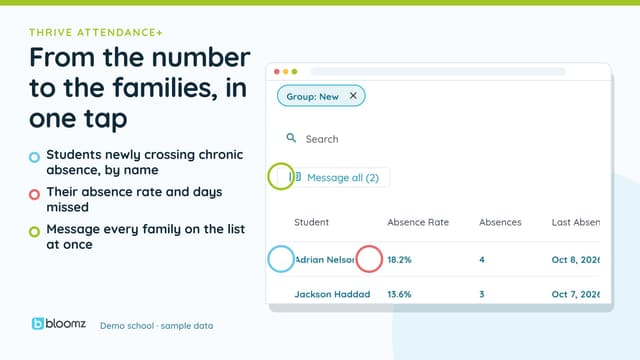
Introducing Thrive Attendance+: A Name for What Was Already There
Thrive Attendance+ names the attendance capability already inside Bloomz 360: SIS-sourced truth, in-app absence reporting, a tiered early-warning system, a notice ladder (CA, TX and WA coded to statute), certified letter translation, and analytics inside Dashboards. Nothing here is new code — it's a name, so a district can find it and compare it.
-

Messaging and alerts
Newsletters That Start From Your Own Templates
The Newsletter Studio block editor now runs as its own surface in the Bloomz web app, and "Insert from Template" lets you start a newsletter from your group's own saved newsletter templates.
-
Product updates
Seven Things Admins Asked For Since Launch
From a contactability benchmark in District Reports to a search box on a 40-module More menu, here are seven specific things admins and IT directors asked for, and what we built for each.
-

Product updates
Small Things Families and Teachers Will Notice This Fall
Four small, honest upgrades landing on Bloomz this fall: urgent DMs that break through quiet hours, sign-ups you can build now and publish later, translations that remember who made them, and a handful of Slick Sites polish items.
-

Product updates
The Clinic, Round Two: Medication Orders, Immunizations, and a Witness
Three additions to Clinic & Medication Log — medication orders you can create and edit in the app, an immunization non-compliance list with a Notify action, and server-enforced witness checks on every administration — plus a new staff Health Profiles student list.
-

Attendance, PBIS and SEL
Thrive Academics: Test Scores Next to Attendance, Behavior and SEL
Thrive Academics adds test scores to the Thrive early-warning picture. Nightly signals tell a teacher when a student's growth falls short of similar students, an MTSS grid puts every source in one view, and families get teacher-approved updates in their language.
-

Cities
Utility Insights: Meter Data a Small City Can Actually Use
Utility Insights is an add-on module for Bloomz for Cities, priced by the number of meters monitored. Residents see their own water and power use, bills and a monthly home report. Staff get a ranked list of meters to check.
-
Product updates
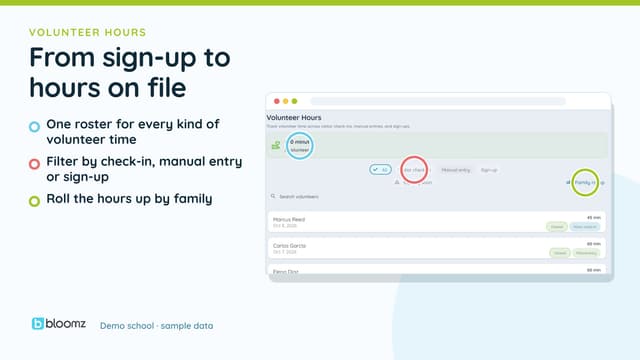
Volunteers, From Sign-Up to Hours on File
Volunteer Hours now closes the loop with Calendar sign-ups, adds a background-check record with expiring-soon notices, and an optional household hours quota — all built on the volunteer tracking Bloomz already had.
-
Product updates
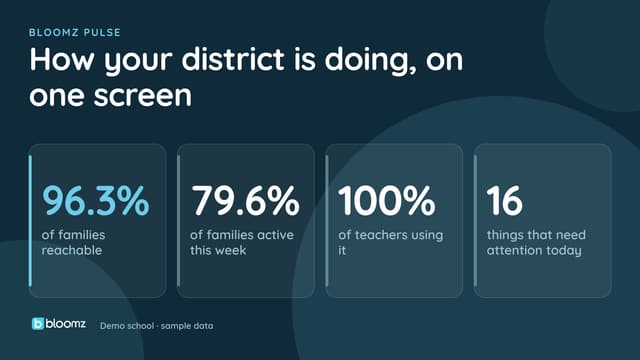
Bloomz Pulse: Every Number Is a Door
Bloomz Pulse is the one dashboard for school and district leaders. Every tile opens the records behind it, and you can message families, assign follow-ups and schedule reports from the same list.
-
Cities
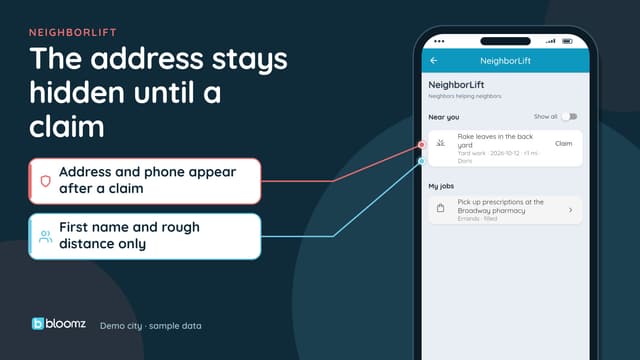
NeighborLift: A Neighbor-Help Program Without the Spreadsheet
Most cities already run some version of Snow Angels: a form, a phone list and a spreadsheet one staff member keeps alive. NeighborLift puts that program inside the city app. Staff approve both neighbors and volunteers, a nearby volunteer claims the request, the address stays hidden until they do, and points follow once the neighbor confirms.
-
Product updates
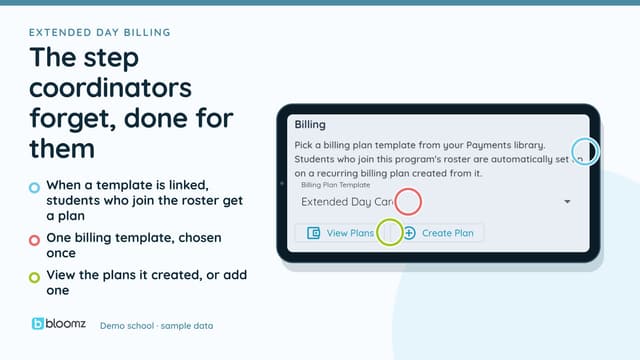
Extended Day Billing That Runs Itself
Enrolling a student in your after-school program now automatically creates their recurring billing plan — and unenrolling pauses just that plan, never the family's other school charges. Here's the loop and its limits.
-
Cities
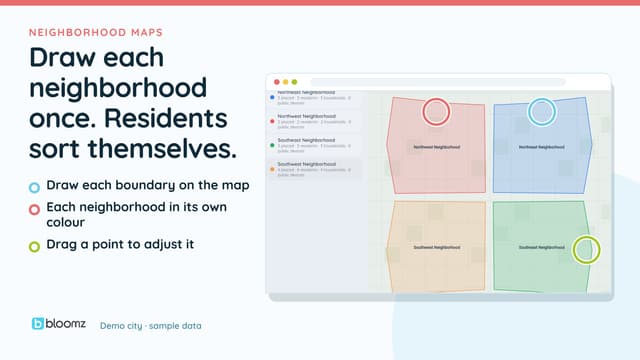
Target an Alert by Neighborhood, Not by List
Some municipal alert tools ask a city to maintain the geography by hand: type a zone code, assign addresses, repeat forever. Bloomz for Cities now works the other way round: draw each neighborhood boundary once, and residents are placed inside it automatically from the addresses the city already has.
-
Attendance, PBIS and SEL
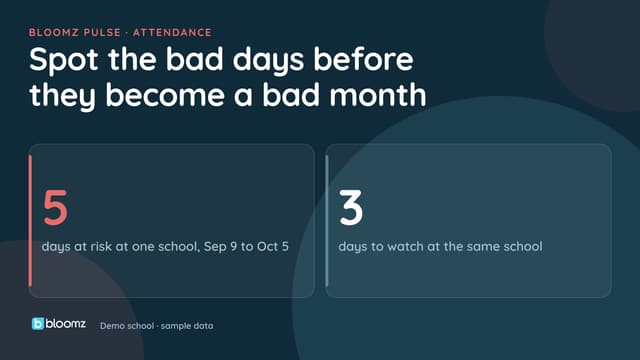
Attendance Analytics, in the Lens You Already Open
An absence heatmap, an ADA funding estimate, and a period-by-period report — built as sections of the Dashboards Attendance lens rather than as another reporting tool nobody remembers exists.
-
Product updates
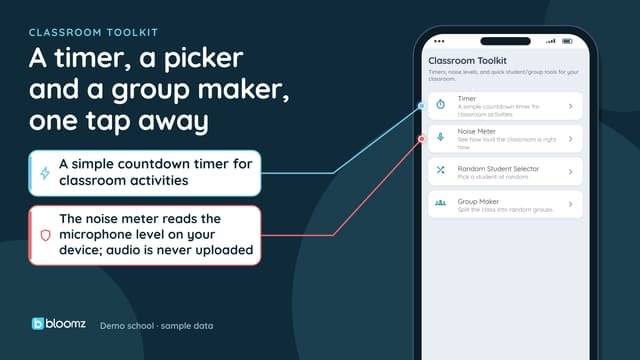
A Timer, a Noise Meter, and the One-Ledger Rule
The Classroom Toolkit puts four mid-lesson tools inside the app teachers already have open — and hands off to the same behavior record everything else uses. Here's what we built, and the two things we decided not to.
-

Websites and integrations
The Two Pages Families Check Most Are the Two Nobody Updates
The athletics schedule and the lunch menu are the most-visited pages on most school websites and the most reliably out of date. The reason isn't neglect — it's that the website is a second copy of information that already lives somewhere else.
-

Product updates
Who Authors, Who Measures, Who Decides
At district scale, standardizing something centrally only works if each school still sees its own numbers and each family keeps the parts of a setting that were never the district's to touch.
-

Product updates
Sign-Up Deadlines That Hold
Collecting sign-ups was never the hard part. Holding the list steady in the last 48 hours before the event is. Why a deadline has to be set at creation, not added later.
-

Language access
Who Decides Your Family's Language?
Every platform asks what language a family speaks. Almost none ask who gets to answer — and whether that answer means the same thing for a message and for the app. It doesn't, and treating it like one setting is how families end up locked out of software that's supposedly translated for them.
-

Product updates
Admissions CRM: Inquiry to Enrollment, No Second Portal
Capture leads, run save-and-resume applications, score candidates side by side, and run a fair lottery, then convert an accepted student into the same Registration & Enrollment pipeline everyone else uses.
-

AI
A Rewrite You Approve, Not One That Sends Itself
AI Writing Assistance rewrites a message to a target reading level or tone, drafts conversation-starter questions, and offers phrasing suggestions a teacher accepts, edits, or rejects line by line.
-

Websites and integrations
Dynamic SIS Groups: Build the List Once, Never Rebuild It
Define a group by grade, attendance tier, or a Bloomz Pay balance, and membership updates itself after every SIS sync, no spreadsheet, no manual roster maintenance.
-
Product updates
Two Small Additions to Bloomz 360 That Punch Above Their Size
Health Action Plans matches SchoolStatus Operoo's EpiPen expiry watchdog and emergency card; Walk the Halls matches ClassDojo's district-wide classroom feed. Both ship this fall on Bloomz 360.
-

Messaging and alerts
One Post, Three Social Feeds, Zero Extra Tools
Social Cross-Posting is built and coming, not yet available to districts: it will publish a Bloomz post to your school's Facebook, Instagram, and X automatically, with automatic retries on failure.
-

Product updates
A Staff-Only Room, Inside the App You Already Use
Staff-only Department groups whose posts never reach parents, plus a folder-organized Materials Hub with staff-only and member visibility, inside the app your staff already use.
-
Cities
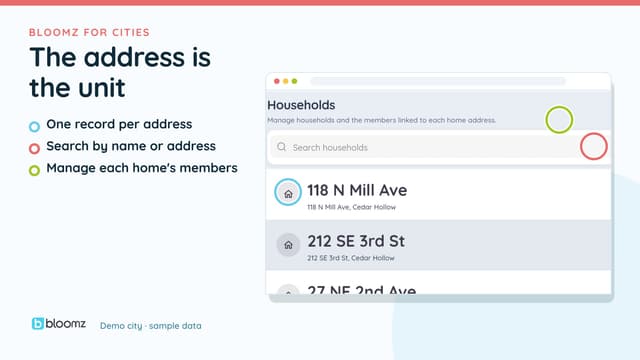
Why a City Platform Should Work From the Household, Not the Resident
School software organizes everything around the student. Cities that borrow that model end up with a list of whoever happened to sign up. The unit that makes a city's work make sense is the address — and a household record is what turns a signup list into a service map.
-

Product updates
Bloomz Grow: Observations Everyone Sees, Coaching Only Two People Do
Bloomz Grow adds rubric-based classroom observations and confidential coaching cycles on one platform, with coaching notes and focus areas visible only to the coach and the teacher.
-

Product updates
Push Your Bloomz Calendar Into the One You Already Check
Subscribe to any calendar with a change-alert toggle, then push events into a dedicated calendar on Google or Microsoft, kept in sync, matching Finalsite's subscription and change-alert model.
-

Product updates
A Role Template for the Job Your District Actually Has
Build a named, reusable role template like Librarian or Athletic Director, and assign it to a specific person at a specific school, layered on top of Bloomz's existing role system.
-

Product updates
Forms That Route Themselves
Attach a multi-step approval chain to any form, by role, staff capability, or a named approver, with due dates, reminders, and a district-wide template library, matching SchoolStatus Forms & Flows.
-
Messaging and alerts
Message Series: Three Family Programs, Ready on Day One
Family Check-Ins, an Attendance Message Series that branches on real Thrive data, and PreK-3 Home Learning activities, all on one reusable engine, matching TalkingPoints and SchoolStatus Literacy.
-

Product updates
A School Store That Doesn't Need Its Own Spreadsheet
Sell spirit wear with size and color variants and real-time inventory, right inside Bloomz Pay, on the same ledger, Stripe account, and year-end statement as tuition and fees.
-

Language access
Translation+: A Glossary, an Explainer Button, and Your Own Reviewers When It Matters
Translation+ adds a district-curated education glossary, a 'What does this mean?' button for plain-language definitions, escalation to your own certified reviewers or a vendor you connect, and document translation.
-
Messaging and alerts
Voice & Video Messages: Say It, Don't Type It
Attach a voice clip or a short video to any post, direct message, or mass message, with automatic transcription and a translated caption on request, right inside the app families already use.
-

AI
A Description for Every Image, and One Moderation Queue for Text and Pictures Alike
Images missing alt-text now get a BLISS-suggested description automatically, still editable before anything publishes. And any flagged image, in a post or a school message, holds through the exact same moderation queue and district policy flagged text already uses.
-

Attendance, PBIS and SEL
A Text Reply That Lands in the Record, and a Friday Digest That Writes Itself
Two new Thrive-adjacent modules ship this fall: Attendance Conversations, where a guardian's text reply to an absence notice correlates to the exact outreach and updates the student's real record, and Weekly Learning Summary, a Friday digest composed from a family's actual assignment, grade, portfolio, and attendance data.
-
Product updates
Community Desk: When a School Answers Escalation Becomes a Real Staff Task
An escalated parent question now gets an assignee, an SLA clock, and a close-out with a resolution note the asker actually sees, plus a weekly recurring-questions digest that shows your team what families keep asking and where coverage is thin.
-

Product updates
Donation Campaigns and Event Tickets Join Bloomz Pay
Run a fundraising campaign with a goal thermometer, or sell priced-tier event tickets with real-time capacity tracking, all minted through the same billing engine as tuition and fees, and checked in with the same QR scanning your front desk already uses.
-

Product updates
Introducing Thrive IEP: The Family Side of Special Education, Available Now
Thrive IEP is available now on Bloomz 360: meeting invites the moment a meeting is scheduled, plan summaries in the family's app language, consent signed from a phone, interpreter requests families can make from the meeting card, and goal progress between meetings. It works alongside Frontline, EdPlan, or SEIS, never replaces them.
-

Language access
One Translation Review Queue, Four Content Types, and a Starter Template Library
The certified-translation pipeline built first for Thrive's attendance letters now covers posts, messages, IEP documents, and Secure Document Delivery. Alongside it, a district-governed Message Template Library with 25 starter templates whose machine-drafted translations your district reviews and certifies.
-

Messaging and alerts
Staff Calling: Office Hours, Voicemail, and a Transcript on the Same Record
Staff Calling adds office hours, Do Not Disturb, translated voicemail greetings with automatic transcription, and a searchable call log with notes and caller blocking, all landing on the same CommunicationLog row as a family's texts.
-
Language access
Massachusetts 603 CMR 57.00 and Why Certified Translation Review Is Coming for Every District
Massachusetts' new regulation, effective September 1, 2027, sets a defensible standard for translating compliance-critical family notices, not just 'translate it.' Here's how Bloomz's machine-draft-to-certified translation pipeline works, and why it matters even outside Massachusetts.
-
Language access
The IEP Meeting Notice That Nobody Could Read
Special education law guarantees parents a meaningful role in their child's plan. In practice, families get a notice they can't read, a meeting they can't attend, and progress they hear about once a year. That gap is a delivery problem, and delivery is solvable.
-
Cities
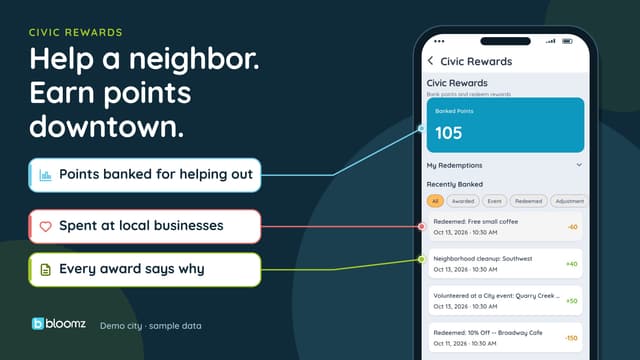
What Is a Civic Rewards Program?
Points for volunteering at a cleanup, showing up to a town hall, or reporting a pothole, redeemable at local businesses. A civic rewards program turns participation into something a city can measure and reward. Bloomz for Cities has one built into the app residents already use.
-

Cities
Civic Engagement Platform Pricing: Why Is Everyone Hiding It?
Alert systems, 311 tools, and civic engagement suites almost all route to a quote request instead of a price. What quote-only pricing actually costs a city manager working against a purchase-order limit.
-
Cities
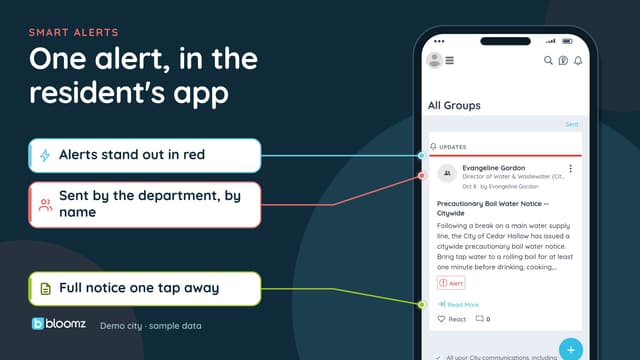
The Boil Water Notice Playbook for Small Cities
Who to notify, which channels to use, how to target by neighborhood, how to reach non-English-speaking households, and how to prove delivery. An operational playbook for issuing a boil water notice, built for small-city public works and utility staff.
-
Cities
Utility Billing Notices Residents Actually See
Bills that sit unread and shutoff notices that arrive too late. What it takes to get a utility notice actually seen, how utility service accounts and statements can sit in the same app as the notice, and why the boil-water alert and the bill belong in the same app.
-

Cities
The Best City Apps for Small Towns: What to Look For
A criteria-first buyer's guide for small cities and towns choosing a resident engagement platform: multi-channel alerts, two-way translated conversation, 311 reporting, payments, published pricing, and PO-friendly procurement.
-
Websites and integrations
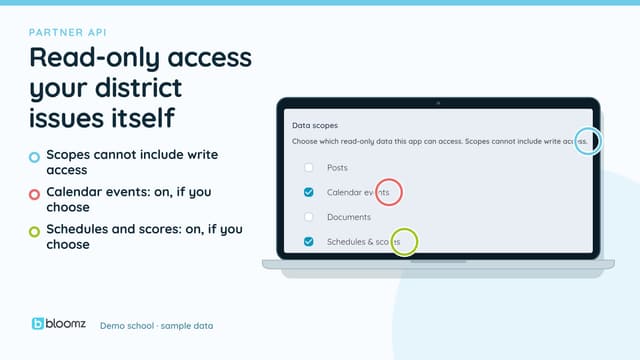
Build on Bloomz: The Partner API and Signed Webhooks
For tech directors and the developers around your district: read-only scoped tokens your district controls, five webhook events with Stripe-style signatures and automatic retries, a full delivery log, and no write access — by construction.
-

Cities
CivicPlus Alternatives for Small Towns
CivicPlus is a strong, established platform for larger cities with the budget to match. For a small town, a module-by-quote model can outgrow the budget fast. What to look for in an alternative, module by module.
-
Product updates
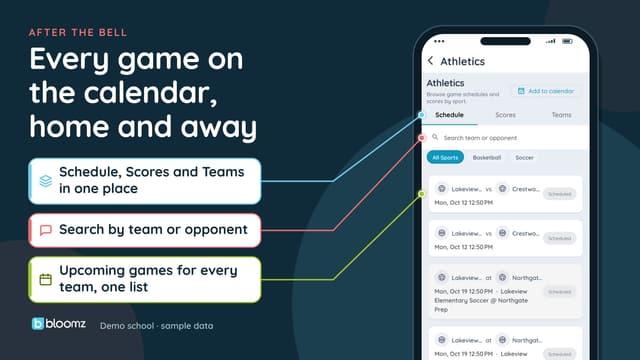
After the Bell: Athletics, Extended Day, and the Rest of Campus Life
The school day doesn't end at dismissal. New Bloomz modules cover what happens next — team schedules and scores, after-school programs with automatic check-in, lunch menus with allergen flags matched to your child's file, the library, substitutes, tutoring, volunteer hours, and bus status.
-

Cities
CodeRED Alternatives for Small Cities (2026)
Alert-only platforms like CodeRED do one job: mass notification. A factual look at what small cities actually need beyond alerts, and what November 2025's CodeRED outage revealed about single-purpose systems.
-
Product updates
From First Daycare Day Through 12th Grade: Why Continuity Beats Feature Checklists in Childcare Software
Brightwheel and Procare are excellent center-operations platforms. But the established childcare apps share one structural trait: they end around pre-K. The unclaimed axis isn't a bigger feature list — it's one platform, one family record, and one language experience across the whole journey.
-

Product updates
Software for District-Run PreK and Head Start Programs
District-run preK and Head Start programs need district-wide communication and translation like a K-12 school, plus health/immunization tracking and subsidy-aware billing like a childcare program. Most software is built for one side or the other. What the combination actually requires, who serves it today, and where Bloomz fits.
-
Product updates
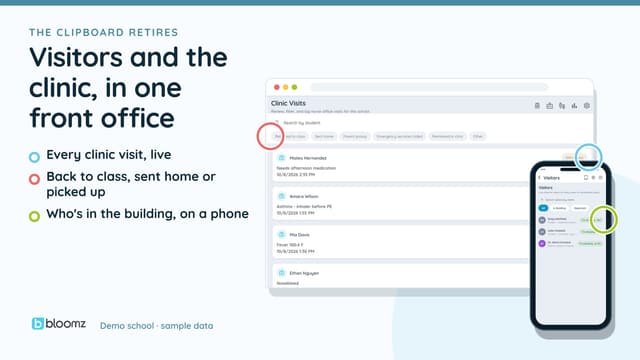
The Clipboard Retires: Visitors, the Clinic, and Office Referrals Go Digital
Three new Bloomz modules take the front office off paper: visitor sign-in with watchlist screening and photo badges, a nurse's office with a tap-to-confirm medication record, and office referrals filed from a phone in under a minute.
-
Product updates
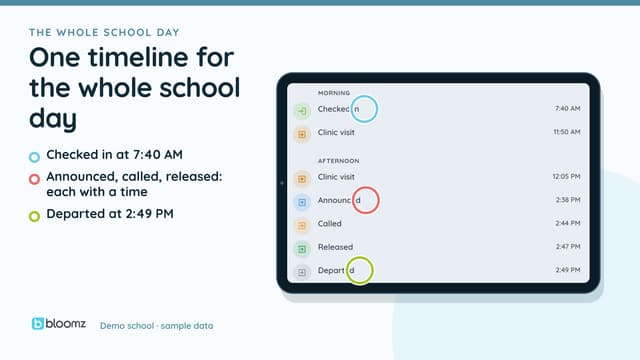
Welcome to the New Bloomz: The Whole School Day, On One Record
44 enhancements and 50+ new modules you can add for back-to-school — and Bloomz becomes the only unified whole-day, whole-child platform for schools: the student timeline plus the family relationship. Here's the day, hour by hour.
-
Product updates
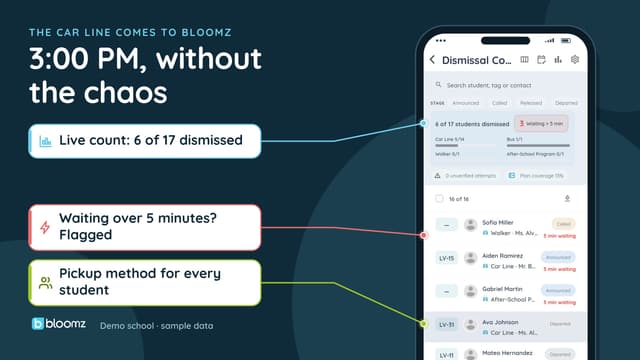
The Car Line Comes to Bloomz
Dismissal Management is available to add: weekly pickup plans, delegated adults, a one-tap 'I'm here' announcement, and a live car-line console for staff — in the app families already use, with no location tracking.
-

Messaging and alerts
Sent to the Wrong Families: Post Recall, Undo, and the Audience Count That Prevents It
Every school communicator has sent something to the wrong audience. What changes when the composer counts your real recipients before you send — and lets you pull a post back after.
-

Comparisons and buying guides
Accessibility in School Communication: What a VPAT Actually Tells You
Districts are required to serve every family, including those using screen readers and assistive technology. How to read a vendor's VPAT, what 'partially supports' really means, and why an honest report beats a compliance badge.
-

Messaging and alerts
Profanity Screening for School Messaging — Without an AI Judging Anyone
Bloomz now screens posts, comments, and messages against a transparent wordlist, warns the sender, and holds overrides in an admin review queue. Why we built moderation with severity tiers, human review, and no AI — and why threats and cries for help get opposite treatment.
-
Attendance, PBIS and SEL
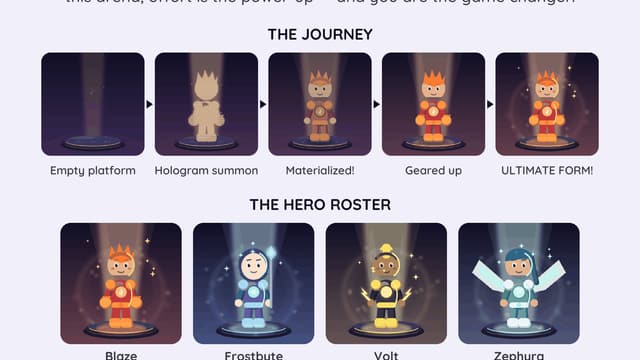
Meet the 15 New Bloomz Behavior Themes — From Hatching Eggs to High-School Constellations
360 new milestone characters across 15 age-banded behavior themes, each with five-stage progressions and a printable classroom poster. Why age-appropriate recognition art matters, and which plans include them.
-

AI
Cut Front-Office Call Volume with an AI That Actually Knows Your School
Most calls to a school front office ask questions the school has already answered somewhere. How School Answers deflects the repeat questions — in any language, at 9pm — and what that's worth in staff hours.
-

AI
How Bloomz AI Works: Drafts You Approve, Nothing Sends Itself
BLISS AI is the foundation under every Bloomz module — but it runs on one rule: AI proposes, humans decide. How the trust stance works in practice across messaging, early warning, SEL, safety reporting, and parent-facing answers.
-

Attendance, PBIS and SEL
Student Portfolios: Showing Families Growth, Not Just Grades
Report cards tell families where a student ended up. Portfolios show how they got there. Why digital student portfolios belong on the same platform as your school communication — and what to look for in portfolio software.
-

Comparisons and buying guides
Best School Enrollment & Registration Software (2026): PowerSchool Enrollment and SchoolMint Alternatives
PowerSchool Enrollment, SchoolMint, Frontline, and SIS-native forms all promise to end the paper gym-line. An honest field guide to what enrollment software actually has to do — especially for districts serving families who don't read English.
-

Websites and integrations
Enrollment Data That Writes Back to Your SIS — Without a Registrar Re-Keying It
Most 'online enrollment' still ends in a pile of PDFs someone re-types into the SIS. Here's what real field-level writeback looks like — dry-run validation, a review worklist, and an audit trail — and why the SIS you run changes what's possible.
-
Language access
Enrollment in Every Family's Language: Registration That Works in 250+ Languages
Online enrollment made registration easier — but mostly for families who read English. Here's how Bloomz built enrollment that renders the whole experience, not just the form text, in 250+ languages and writes clean data back to your SIS.
-
Comparisons and buying guides
Bloomz vs Brightwheel: A Fair Comparison for Center Directors
Brightwheel is a strong childcare app. A director's side-by-side with Bloomz for Childcare: check-in, ratios, billing, languages, what Bloomz has live, and what Bloomz does not do.
-

AI
Parent-Facing AI That Answers From YOUR Content, Not Just Your Website
A parent asking 'when's the early-release day' doesn't want a chatbot that read your homepage. They want the answer that lives in the handbook, the calendar PDF, and last week's email. The difference between shallow website grounding and deep document grounding — and why it decides whether the AI is trusted.
-

Product updates
Childcare Check-In, Health Screening and Immunization Tracking
What a center director needs from check-in, health profiles and immunization tracking: a clean record of who dropped off, who picked up, who is healthy, and what is missing before an inspector asks.
-

Comparisons and buying guides
Best Childcare Apps: Brightwheel Alternatives for Center Directors
Brightwheel, Lillio, Procare and Kangarootime are all good. How a center director or owner can pick between them, what to test in a demo, and where Bloomz for Childcare fits.
-

Websites and integrations
Save Time with Bloomz Slick Sites: AI-Powered School Websites, Finished by Experts
Most school website platforms hand you an editor and a migration invoice. Bloomz Slick Sites is powered by BLISS AI, finished by real designers and quality experts, and migration is free.
-

Messaging and alerts
Mass Private Messaging for Teachers: One Message, Sent Individually, Done Right
A teacher needs to send the same note to 28 parents — but privately, one-to-one, not in a group thread where everyone sees everyone. The BCC-style message every teacher wants, and the details that separate a good version from a spammy one.
-
Comparisons and buying guides
Best School Payment Software: MySchoolBucks Alternatives (2026)
MySchoolBucks is the default for cafeteria and fee payments, but it's not the only option — and it's the wrong fit if you also need tuition billing or want payments inside your communication platform. An honest look at the alternatives and how to choose.
-

Comparisons and buying guides
The Best ParentSquare Alternatives in 2026 (An Honest Comparison)
Evaluating a ParentSquare alternative? Here is a candid 2026 rundown of the top K-12 school communication platforms, where each one fits, and how to choose, covering PBIS, full-app translation, and pricing transparency.
-
Product updates
Teacher-Initiated Payment Requests, Without Another Vendor
The classroom collection — $4 for the pizza party, $12 for the art supplies — is where cash still rules and teachers still play bank. Letting teachers request small payments inside the app they already use, done right.
-
Attendance, PBIS and SEL
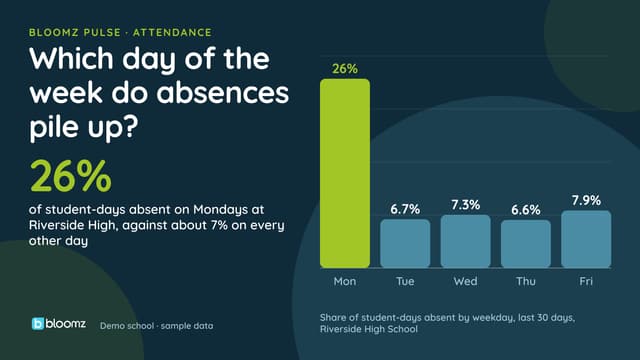
The Specific Behaviors That Signal Chronic Absenteeism (and the Research Behind Them)
Chronic absenteeism starts with specific, observable behaviors long before it becomes chronic. Here are the early warning behaviors the research points to, from tardiness to the ABC indicators, and how to catch them in time.
-
Attendance, PBIS and SEL
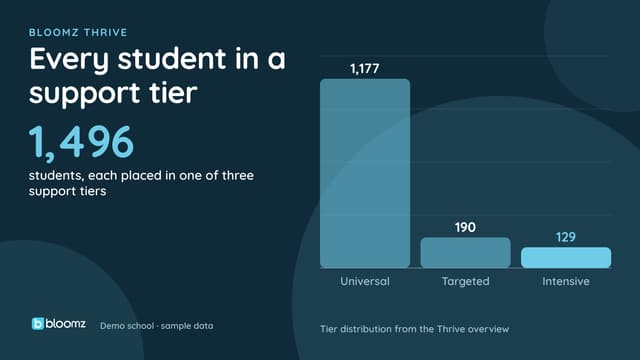
A Tiered Attendance Playbook: Catching Chronic Absence Before It Sets In
Once you can see the early behaviors that signal chronic absence, the next question is what to do. Here is a tiered, MTSS-style attendance playbook, from universal prevention to intensive support, and the data layer that makes it work.
-

Comparisons and buying guides
Bloomz vs ParentSquare: A 2026 Side-by-Side Comparison
How Bloomz and ParentSquare compare on translation, PBIS, pricing, and family engagement. See where the two K-12 communication platforms differ and which fits your district.
-

Attendance, PBIS and SEL
How to Reduce Chronic Absenteeism With Same-Day Family Communication
Chronic absenteeism is a relationship problem before it is a data problem. Here is how same-day, translated family notices and early-warning flags help districts intervene before the pattern hardens.
-
Comparisons and buying guides
Bloomz vs Remind: The Modern, Unified Alternative
Remind is now part of ParentSquare. If you are evaluating Remind for school communication, here is how Bloomz compares on translation, features, pricing, and what districts get in one platform.
-

Language access
How to Genuinely Engage Multilingual Families (Beyond a Translate Button)
A translate button on the message is not the same as an app a family can actually use. Here is what real multilingual family engagement requires, from full-UI translation to right-to-left support and two-way replies.
-

Comparisons and buying guides
School Payment and Tuition Software: What Districts and Preschools Actually Need
A high school collecting field-trip fees and a preschool billing monthly tuition with a state subsidy have almost nothing in common — except that most payment tools only serve one of them. What real K-12-through-childcare billing requires.
-

Comparisons and buying guides
Bloomz vs ClassDojo: Which Fits Your School or District?
Bloomz and ClassDojo both connect teachers and families, but they serve different needs. Compare them on cost to parents, translation, PBIS, and district readiness.
-

Comparisons and buying guides
Switching School Communication Platforms: A District Migration Checklist
Changing your district's communication platform feels risky, but most of the risk is manageable with a plan. Here is a practical migration checklist covering SIS integration, data, staff training, family onboarding, and the questions to ask every vendor.
-

Funding
ESSA Funding for School Communication: Title I, III, and IV Explained
A plain-English guide to using ESSA Title I, Title III, and Title IV funds for a family engagement and school communication platform, with the eligibility basics districts ask about.
-

Funding
Stretching a Title I Budget: Fund Family Communication Without New Money
Family engagement is fundable under Title I, Part A, and consolidating point tools can free the dollars to pay for it. A practical guide to stretching Title I and ESSA funds toward communication that actually reaches families.
-

Comparisons and buying guides
Best Anonymous Reporting and School Safety Tip Line Software (2026)
An honest field guide to anonymous tip line and school safety reporting tools — STOPit, Safe2Tell, Anonymous Alerts, Vector LiveSafe, and where a communication-integrated option fits. What to evaluate, and the trap to avoid.
-
Family engagement
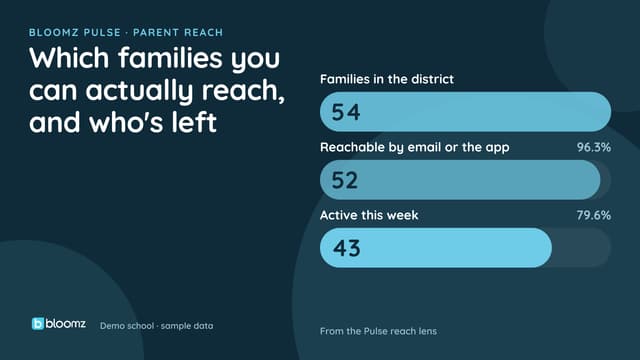
What 'Contactability' Really Means (and How to Actually Reach Every Family)
Contactability has become a headline metric in school communication. Here is what the number actually measures, where it can mislead, and what it takes to reach every family for real, not just on paper.
-

Messaging and alerts
Two-Way Calling Without Sharing Personal Numbers: A Guide for Schools
Teachers and families often need to talk by phone, but not by trading personal cell numbers. Here is how schools enable two-way calling and texting through dedicated school numbers, with translation, while keeping staff privacy intact.
-

Messaging and alerts
Anonymous Tip Lines for Schools: What Makes One Actually Work
Most school tip lines fail quietly — not because students have nothing to report, but because the design discourages reporting or the reports go nowhere. What separates a tip line that saves a kid from one that just checks a box.
-
Family engagement
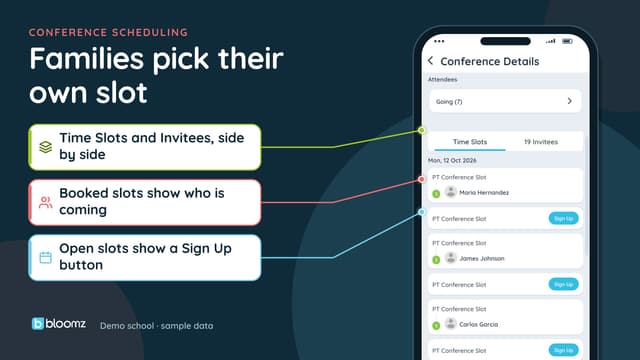
Parent-Teacher Conference Scheduling for Districts (Not Just Teachers)
On most platforms, conference signups live inside each teacher's account, leaving principals and district leaders blind. Here is what district-level conference scheduling looks like, and why the school-wide view changes how you run the season.
-

Comparisons and buying guides
Best SEL and Student-Wellbeing Check-In Software (2026)
The student-wellbeing software market splits along an ethical line most buyers don't notice until it's too late: tools that ask students how they're doing versus tools that surveil them. A field guide, and the questions that keep you on the right side of that line.
-
Language access
Reaching Arabic and Urdu-Speaking Families: Right-to-Left Done Right
Arabic, Urdu, Farsi, and Hebrew do not just need translated words, they read right to left. Here is what proper RTL support means for school communication, and why pasting translated text into a left-to-right app falls short.
-

Attendance, PBIS and SEL
SEL Check-Ins That Respect Students, Not Surveil Them
There is a bright line between asking a student how they're doing and monitoring their keystrokes for signs of distress. One builds trust; the other spends it. Why transparent SEL check-ins beat covert surveillance — and how to tell them apart.
-

Websites and integrations
Why SIS Integration Makes or Breaks a School Communication Rollout
The success of a district communication platform is decided by its SIS integration more than any feature list. Here is what good integration looks like, the pitfalls that sink rollouts, and the questions to ask before you sign.
-

Comparisons and buying guides
Best MTSS and Early-Warning Software for Districts (2026)
A buyer's guide to MTSS and early-warning systems — what to look for, how the categories differ, and the one question that separates attendance-only tools from whole-child ones. An even-handed field scan for 2026.
-

Messaging and alerts
Emergency Notifications That Actually Reach Every Family
In a crisis, an emergency alert is only as good as the families it reaches. Here is what separates a notification system that works under pressure from one that fails the families who need it most, including speed, multichannel delivery, and translation.
-
Attendance, PBIS and SEL
Why SEL Belongs on the Same Platform as Communication (and What the Research Shows)
Social and emotional learning produces measurable gains, but only when it is reinforced consistently and connected to families. Here is the research on SEL outcomes and the case for keeping SEL on the same platform as behavior and family communication.
-
Language access
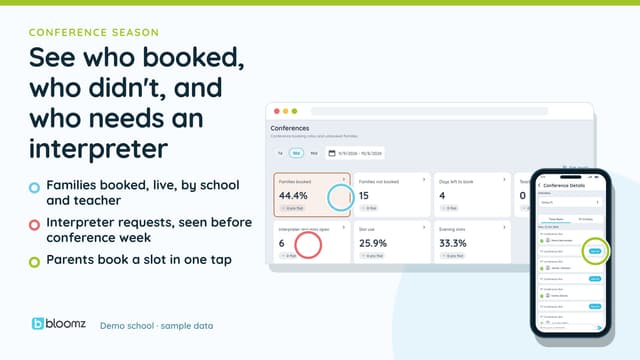
Conference Dashboards and Interpreter Tracking: The Equity Gap in PTC Season
Parent-teacher conference season generates a school-wide signal most districts never read: which families booked, which didn't, and which needed an interpreter. The dashboard that turns conference scheduling into an equity instrument.
-
Product updates
Why Permission Slips Still Don't Come Back (and What Actually Fixes It)
Digitizing a permission slip does not get it signed. The fix is reminders to non-responders only, forms families can complete in their own language, and e-signatures with an audit trail. Here is what to look for.
-

Family engagement
The School Newsletter Nobody Reads, and What Changes When You Fix It
Most school newsletters go out, get a low open rate, and reach the English-speaking families who were already engaged. A look at why that happens and what a newsletter that actually reaches every family looks like.
-

Websites and integrations
Migrating a District Website Without the Six-Month Project
District website migrations have a reputation for being slow, expensive, and painful. A look at why they balloon, and how running your site on the same engine as your communication makes the move and the upkeep far smaller.
-
Attendance, PBIS and SEL
School-Wide House Points and PBIS at Scale
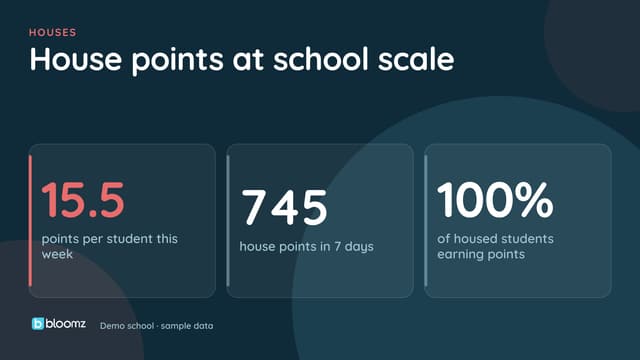
Classroom points work in one room. Running positive behavior recognition across a whole school — kiosk leaderboards, houses that cut across grades, accumulation reporting — is a different problem. Here is how to do it without it collapsing into busywork.
-

AI
What AI Should (and Shouldn't) Do in School Communication
Districts are right to be cautious about AI in schools. The useful line is between AI that assists staff (drafting, translating, surfacing patterns) and AI that acts on its own. Here is where that line belongs.
-

Messaging and alerts
The Complete Guide to School-to-Home Communication (2026)
A district guide to modern school-to-home communication: multichannel reach, two-way messaging, translation, read visibility, and choosing a platform that reaches every family.
-
Attendance, PBIS and SEL
MTSS Early Warning That Goes Beyond Attendance
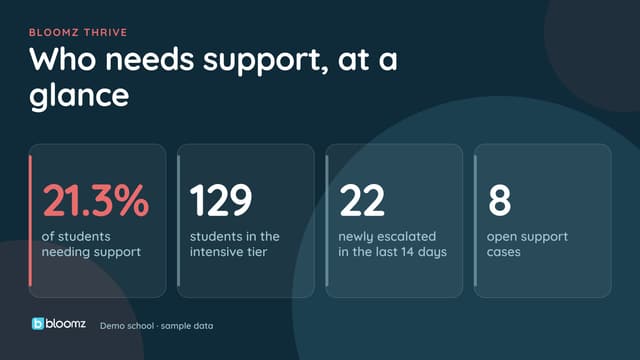
Attendance-only early warning catches the student who is already gone. Whole-child MTSS triangulates attendance, behavior, and SEL to see the student who is about to slip. Here is the difference, and why it matters.
-

Language access
School Translation Done Right: A District Guide to Language Equity
What real language access for multilingual families requires: full-app translation, right-to-left support, two-way replies, translated forms, and Title VI obligations.
-
Attendance, PBIS and SEL
The District Guide to Reducing Chronic Absenteeism
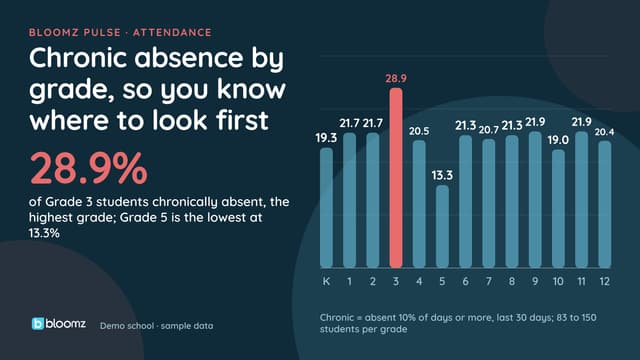
Chronic absenteeism starts with specific behaviors and responds to early, translated family outreach. A guide to the research, the early-warning signals, and tiered intervention.
-

Attendance, PBIS and SEL
PBIS for Districts: A Practical Implementation Guide
How districts implement PBIS school-wide, connect behavior to family communication, and avoid paying twice for a separate behavior tool. A practical guide for leaders.
-

Attendance, PBIS and SEL
SEL in K-12: What the Research Says and How to Make It Stick
A research-backed guide to social-emotional learning: what the evidence shows, why implementation quality decides results, and how family connection makes SEL stick.
-

Messaging and alerts
School Emergency Notification: A District Buyer's Guide
What an emergency notification system must do when it counts: instant multichannel delivery, translated alerts, two-way response, and the questions to ask every vendor.
-
Product updates
Digital Forms and eSignatures for Schools: A Complete Guide
Beyond digitizing the PDF: translated forms, e-signatures with audit trails, secure document delivery, reminders to non-responders, and embedding forms on your site.
-
Family engagement
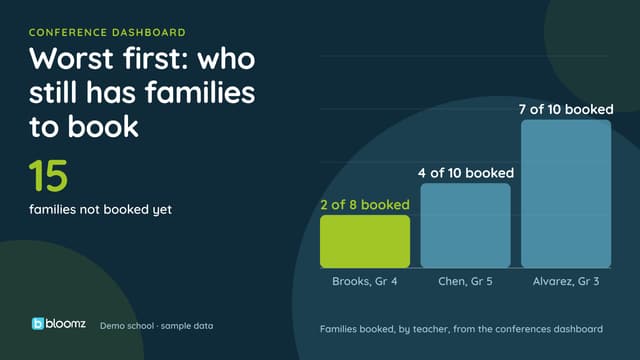
Parent-Teacher Conference Scheduling: The District Playbook
Running conference season at the district level: live signup dashboards, interpreter tracking, boosting hard-to-reach family participation, and coordination beyond the classroom.
-

Websites and integrations
Choosing a District Website Platform in 2026
What to look for in a school or district website platform: accessibility, total cost, content that stays current, and running your site on the same engine as your communication.
-

AI
AI in K-12 Communication: A Leader's Guide to Doing It Safely
Where AI belongs in school communication and where it does not: assistive drafting and translation with educators in control, plus the privacy and guardrail questions to ask.
-

Comparisons and buying guides
One Platform vs Point Tools: A District Cost-of-Ownership Guide
The real cost of running overlapping communication tools, how consolidation frees budget, and how to build the business case for one platform.
-

Comparisons and buying guides
Implementing a District Communication Platform: The 30-Day Guide
A practical rollout guide: SIS and SSO integration, data migration, staff training, family onboarding, and the phased plan that gets a district live in under 30 days.
-

Comparisons and buying guides
School Communication Platforms Compared: A 2026 Buyer's Guide
An honest comparison framework for K-12 communication platforms: what to evaluate on translation, behavior, pricing, and scope, with links to head-to-head breakdowns.
-

Family engagement
Family Engagement That Moves Outcomes: A Research-Backed Guide
What the research links between family engagement and student achievement, the barriers that keep engagement low, and how districts reach the families who need it most.
-

Funding
Funding School Communication: Title I, ESSA, and Beyond
How districts fund family communication through Title I family-engagement set-asides, Title III, and other federal streams, plus how consolidation stretches the budget.
-

Language access
Title VI and Language Access for Schools: What You're Required to Provide
Districts have a legal obligation to communicate meaningfully with families who have limited English proficiency. What Title VI requires in practice, and how to meet it without falling short.
-
Language access
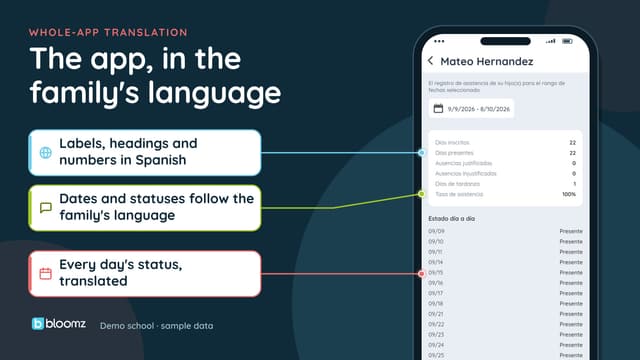
Message Translation vs Full-App Translation: The Difference That Matters
Many platforms translate the message and leave the app in English. The gap between translating a sentence and translating the whole experience is where family access is won or lost.
-

Comparisons and buying guides
Choosing PBIS Software: Integrated With Communication, or Standalone
A standalone behavior tool means a second login, a second contract, and a recognition that never reaches families. How to evaluate PBIS software against communication-integrated platforms.
-
Attendance, PBIS and SEL
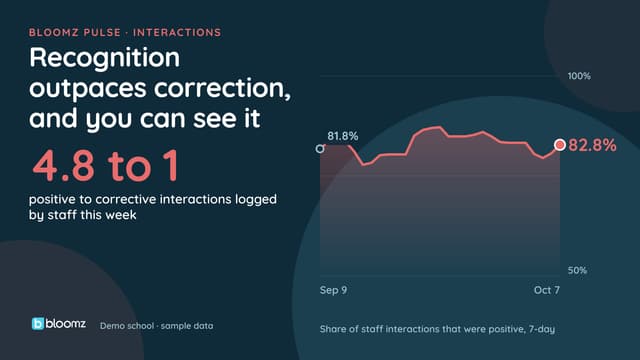
Why PBIS Recognition Has to Reach Home (in Every Language)
A behavior points system that stays inside the school misses half its value. Recognition reinforces best when families see it, which means it has to reach home in the family's language.
-

Attendance, PBIS and SEL
Same-Day Absence Notification: The Research and the How-To
Telling families promptly and specifically that their child was absent reliably reduces missed days. The evidence behind same-day notices, and how to set them up so they actually reach every family.
-
Attendance, PBIS and SEL
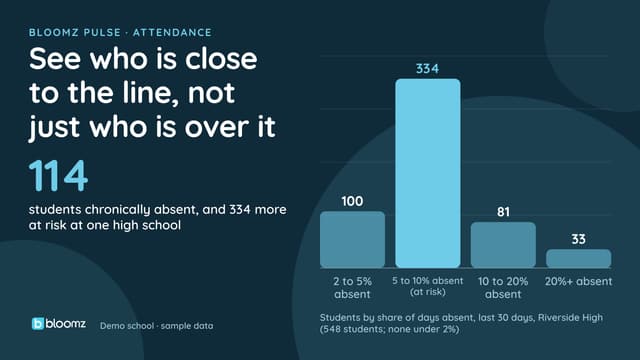
Building an Attendance Early-Warning System (Without Buying Another Tool)
Early-warning systems work when the signals are visible together and surface students automatically. How to build one on the platform you already use, around the ABC indicators.
-

Comparisons and buying guides
Remind Is Now ParentSquare: What Districts Should Do
ParentSquare acquired Remind's K-12 business and Hub customers are being moved onto the ParentSquare platform. If you are re-onboarding anyway, this is the moment to compare destinations.
-
Comparisons and buying guides
How to Run a School Communication RFP
A practical guide to running a request for proposal for a district communication platform: the requirements that matter, the questions that separate vendors, and the evaluation criteria to score on.
-

Language access
Translating School Forms and Documents for Multilingual Families
A translated cover note on an English PDF is not a translated form. What it takes for permission slips, health forms, and report cards to actually work for multilingual families.
-
Language access
Engaging Spanish-Speaking Families: Beyond a Translated Flyer
Spanish is the most common home language other than English in U.S. schools. What genuine engagement of Spanish-speaking families takes, beyond running a flyer through a translator.
-

Language access
How Many Languages Does Your District Actually Need?
Districts often underestimate the language diversity of their families. How to find your real language footprint, and why a platform should cover the long tail, not just the top three.
-
Attendance, PBIS and SEL
Chronic Absenteeism and Multilingual Families: The Reach Gap
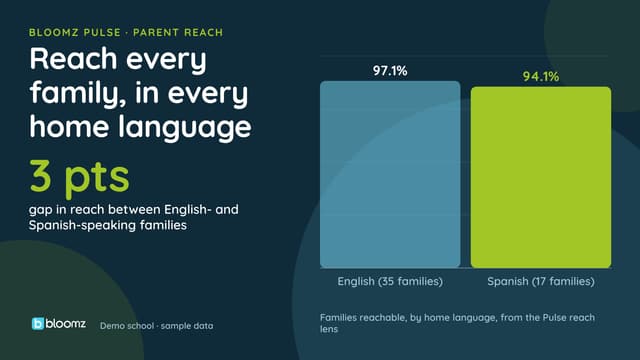
Attendance outreach fails the families it most needs to reach when it arrives in a language they cannot read. How districts close the reach gap for multilingual families.
-
Attendance, PBIS and SEL
Attendance Interventions That Work (and Ones That Don't)
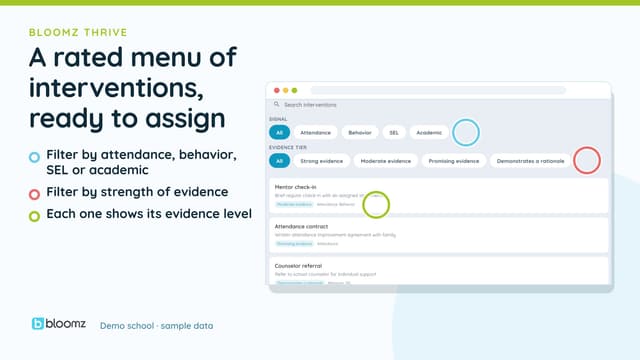
Truancy letters late in the year rarely move attendance. The evidence points to early, personal, relationship-based outreach that reaches families in time and in their language.
-
Attendance, PBIS and SEL
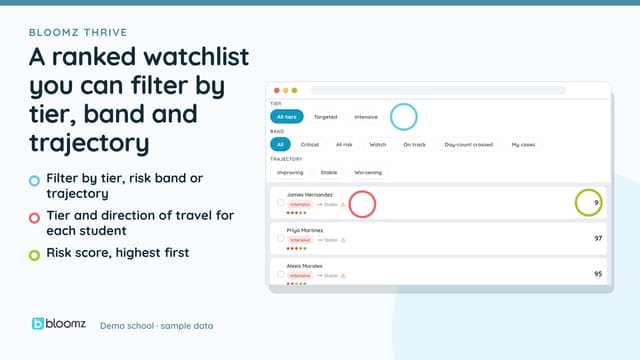
Tier II Behavior Interventions: From Flag to Follow-Through
Tier II is where many MTSS systems break down: a student gets flagged and then nothing happens. How to close the gap between identifying a need and actually following through.
-

Family engagement
MTSS and Family Communication: The Piece Most Frameworks Miss
MTSS coordinates academic, behavioral, and attendance support, but the family is often left out of the loop. Why family communication belongs inside your MTSS, not beside it.
-

Comparisons and buying guides
Best ClassDojo Alternatives for Districts in 2026
ClassDojo is loved in elementary classrooms but is a classroom-level tool. For districts that need governance, translation, and analytics, here are the alternatives worth evaluating.
-

Comparisons and buying guides
Bloomz vs SchoolMessenger: From Robocalls to Real Engagement
SchoolMessenger is dependable for emergency blasts but was built for the robocall era. How it compares with a modern, two-way, translated engagement platform.
-
Comparisons and buying guides
ParentSquare vs Bloomz on Translation: A Closer Look
Both platforms translate, but not in the same way. A focused comparison of message-level translation and full-app immersive translation, and what the difference means for families.
-

Messaging and alerts
Multichannel vs Single-Channel: How Schools Should Reach Families
Betting on a single channel means missing the families who do not use it. Why reaching every family means one message going out across app, SMS, email, and voice at once.
-

Messaging and alerts
Read Receipts and the Last-Mile Follow-Up in School Communication
Sending a message is the easy part. Knowing who has not seen it, and following up with only those families, is what turns a delivery rate into actual reach.
-
Attendance, PBIS and SEL
Bringing SEL Growth Home to Families
Social-emotional learning sticks better when families are part of it. How to extend SEL beyond the classroom so a student's growth is recognized and reinforced at home, in every language.
-

Attendance, PBIS and SEL
Measuring SEL: What to Track and What to Ignore
SEL is hard to measure well and easy to measure badly. A practical look at the signals worth tracking, the ones to avoid, and how to keep measurement from distorting the work.
-

Product updates
Secure Document Delivery: Report Cards and IEPs Done Right
Sensitive student documents cannot go to the wrong inbox. What secure delivery of report cards and IEPs to verified guardians requires, and why convenience can't loosen control.
-

Messaging and alerts
Building a School Crisis Communication Plan
A crisis is the wrong time to figure out your communication. A practical guide to building a school or district crisis communication plan that reaches every family, fast, in their language.
-
Family engagement
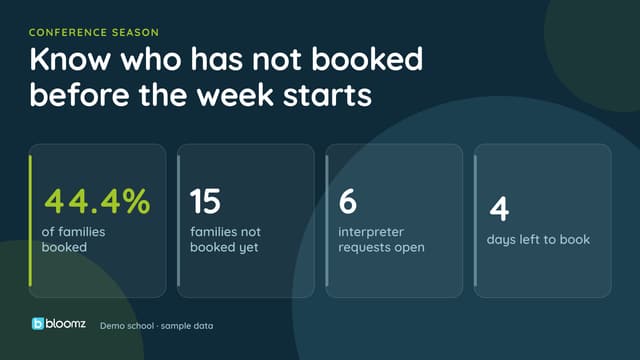
Boosting Conference Signups Among Hard-to-Reach Families
The families least likely to sign up for a conference are often the ones who would benefit most. Practical ways to lift participation among hard-to-reach and multilingual families.
-

Websites and integrations
School Website Accessibility: Meeting WCAG and ADA
A district website that is not accessible is a legal and equity problem. What WCAG and ADA require in plain terms, the common failures, and how to keep a site compliant as content changes.
-

Websites and integrations
One Engine: When Your Website and Communication Share a Backend
Most districts run their website and their family communication as two separate systems, and pay for it in duplicate work. What changes when both run on the same engine.
-

Websites and integrations
Cutting School Website Hosting Costs Without Cutting Quality
Legacy district website platforms carry hosting bills that climb every renewal. Where those costs come from, and how a modern cloud-native platform brings them down.
-
Websites and integrations
A School Website Migration Checklist
A district website migration goes wrong when it has no plan. A practical checklist covering content, redirects, accessibility, staff training, and keeping the site current after launch.
-

AI
AI and Student Data Privacy: Questions Every District Should Ask
Before a district turns on AI features, the privacy questions matter more than the demo. The specific questions to ask a vendor about how student data is used, stored, and protected.
-

AI
Assistive AI for Teachers: Saving Time Without Losing Control
Teachers are stretched, and the right AI gives time back without taking over. What assistive AI looks like in practice, and where the teacher stays firmly in charge.
-
AI
AI Translation in Schools: Where It Helps and Where Humans Stay
AI translation makes reaching every family possible at a scale humans cannot match by hand. Where it is the right tool, and where a human interpreter still belongs.
-
Language access
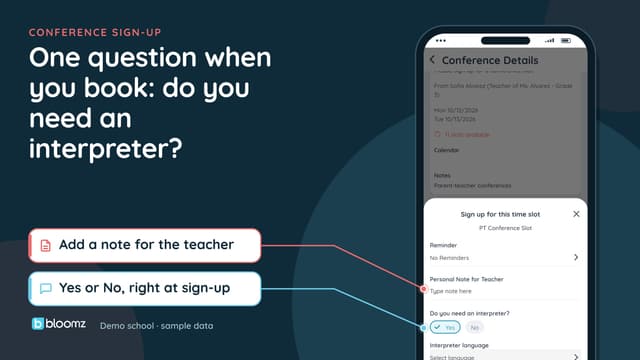
Interpreter Scheduling for Parent-Teacher Conferences
When a family needs an interpreter, that need is too often discovered the night of the conference. How to surface interpreter needs early and staff for them without a scramble.
-
Product updates
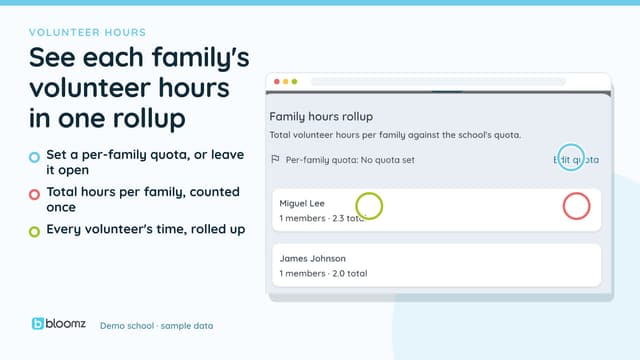
Volunteer and Event Sign-Ups Without the Chaos
Field trips, fundraisers, and classroom helpers usually run on paper sheets and group texts. How districts coordinate volunteer and event sign-ups without the usual scramble.
-

Messaging and alerts
How to Write School Messages Families Actually Read
A message that is too long, too formal, or English-only gets skimmed and forgotten. Practical guidance on writing school communication that families open, understand, and act on.
-
Messaging and alerts
One-Way Blasts vs Two-Way Communication: Why Replies Matter
Broadcasting at families is not the same as communicating with them. Why two-way communication changes outcomes, and what it takes to support replies at district scale.
-
Attendance, PBIS and SEL
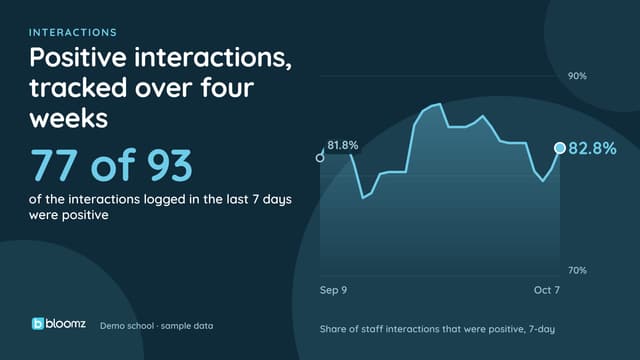
SEL Recognition in Practice: Making It Routine, Not Extra Work
SEL recognition only works if it happens in the moment, not as a separate task at the end of the day. How to make recognizing SEL competencies part of the daily flow.
-

Attendance, PBIS and SEL
SEL for Multilingual Families
Social-emotional learning that only reaches English-speaking families is not equitable SEL. How to make recognition and SEL communication land at home in every family's language.
-

Messaging and alerts
Multichannel Emergency Alerts, Explained
An emergency alert that goes to one channel reaches only the families watching that channel. How simultaneous multichannel delivery works and why it is the standard for school safety.
-

Messaging and alerts
Emergency Communication for Multilingual Families
In a crisis, an alert a family cannot read is a safety gap, not a translation nicety. How to make sure emergency messages reach every family in a language they understand, instantly.
-

Messaging and alerts
Weather Closures and Early Dismissals: Communicating Fast
Closures and early dismissals are decided late and have to reach every family before buses roll. How districts get the message out fast, on every channel, in every language.
-

Product updates
Embedding School Forms on Your Website (and Running Quick Polls)
A form buried in a portal gets fewer responses than one on the page families already visit. How embedding forms on your public site, and running instant polls, lifts participation.
-

Comparisons and buying guides
How Many Tools Is Your District Really Paying For?
Most districts underestimate their communication tool sprawl. A practical way to inventory what you pay for, in licenses and in staff time, before deciding whether to consolidate.
-

Comparisons and buying guides
The Hidden Costs of Fragmented EdTech
The license fees are the visible part. The real cost of running a stack of disconnected tools is the staff time, duplicate data entry, and gaps that never show up on an invoice.
-
Comparisons and buying guides
Building the Business Case for Platform Consolidation
Convincing a cabinet to consolidate communication tools takes more than a feature list. How to build a business case around total cost, staff time, equity reach, and risk.
-

Comparisons and buying guides
Why Quote-Only Pricing Hurts Districts
When every vendor hides pricing behind a sales call, districts lose the ability to budget, compare, and plan. The case for transparent, locked pricing in school communication.
-
Websites and integrations
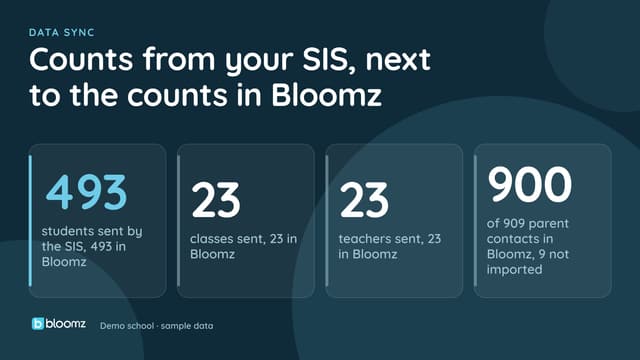
PowerSchool Integration: What to Expect
PowerSchool is the SIS many districts run, and how a communication platform connects to it shapes the whole rollout. What a clean PowerSchool integration looks like and what to verify.
-
Websites and integrations
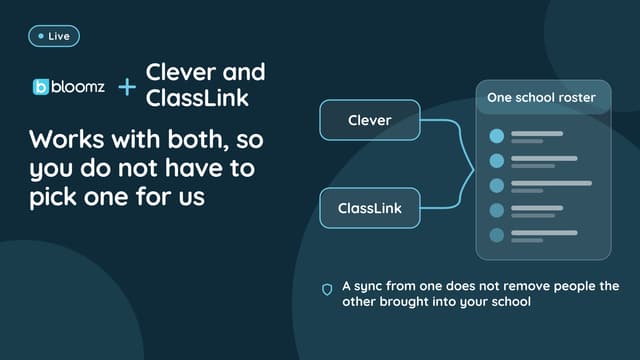
Clever vs ClassLink Rostering, Explained for Districts
Clever and ClassLink both handle rostering and single sign-on, and a communication platform should work with whichever your district uses. A plain explanation of how rostering works.
-
Comparisons and buying guides
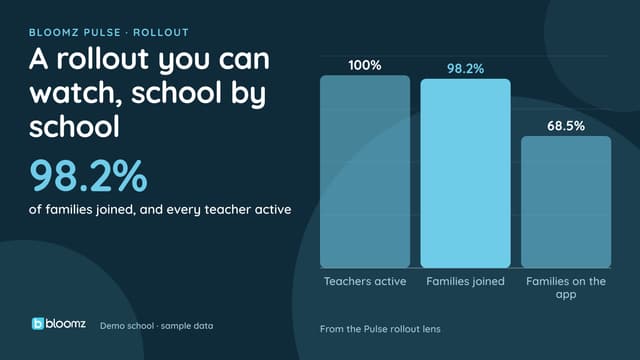
Driving Staff Adoption of a New Communication Platform
A platform only works if staff actually use it. The practical levers that drive teacher and office adoption, and the friction points that quietly kill it.
-

Family engagement
Family Onboarding: Getting Everyone Connected
A communication platform reaches no one until families are connected. How districts onboard families at scale, in every language, so reach is high from day one.
-
Family engagement
The Research Linking Family Engagement to Student Achievement
Family engagement is not a feel-good extra. Decades of research connect it to higher grades, better attendance, and graduation. A look at what the evidence actually says.
-

Family engagement
Reaching Hard-to-Reach Families: Practical Strategies
Every district has families who never seem to respond. Often the barrier is channel, language, or timing rather than willingness. Practical strategies for closing that gap.
-
Family engagement
Family Engagement Metrics That Matter (and Vanity Metrics to Ignore)
Message volume looks like engagement and is not. The metrics worth tracking to know whether your family engagement is actually working, and the ones that just look busy.
-

Family engagement
Equity in Family Engagement: Reaching the Families Most Often Missed
Average engagement numbers can hide the families a school never reaches. What equity in family engagement means in practice, and how to close the gap rather than average over it.
-

Funding
Title III and Language Access Funding for Multilingual Families
Title III supports English learners and their families. How districts can align translation and language-access communication with Title III, alongside Title I family engagement.
-

Funding
Using Federal Funds for Communication Infrastructure
Beyond Title I, several federal streams can support the communication infrastructure districts rely on. A high-level map of the options and how to align a purchase with each.
-

Funding
Writing the Family-Engagement Section of Your Title I Plan
The family-engagement portion of a Title I plan is where a communication purchase becomes allowable and defensible. How to write it so the spend and the purpose connect.
-

Funding
Grants for School Communication Technology
Federal formula funds are not the only option. A practical look at the grant landscape for school communication technology and how to write an application that lands.
-

Comparisons and buying guides
The Cost of Fragmented Communication
School districts today face a paradox. Never before have so many tools been available to connect with families, yet many parents still report frustration, confusion, or missed information.
-

Attendance, PBIS and SEL
How Does a School District Benefit from Implementing PBIS District-Wide?
A school district can see multiple, layered benefits when it implements Positive Behavioral Interventions and Supports (PBIS) district-wide, rather than school by school. Here are the main advantages.
-

Product updates
Bloomz: Built for Teachers, Scaled for Districts
Many apps claim to be all-in-one solutions for schools and districts. One of the big things that sets Bloomz apart is how it all started: not with districts in mind, but with teachers.
-

Comparisons and buying guides
The Double Charge: How ParentSquare's PBIS Gap Forces Schools to Pay Twice
ParentSquare has become a leader in school-to-home communication, but a critical gap emerges for schools focused on building a positive culture: the lack of a genuine, integrated PBIS system.
-

Comparisons and buying guides
Bloomz vs. Apptegy: Great Branding Is Not the Same as a Whole-Child Platform
Apptegy is strong on district branding, websites, and polished comms. Here is an honest look at where Bloomz goes deeper: grounding depth on parent-facing AI, whole-child MTSS, safety, translation, and payments.
-
Attendance, PBIS and SEL
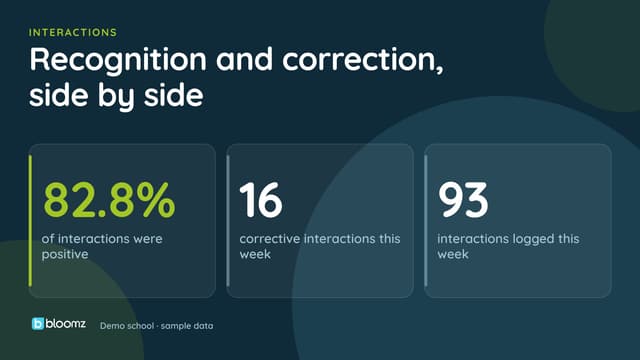
Using Bloomz PBIS Tools for Effective Interventions: Two Illustrative Examples
Teachers increasingly rely on Bloomz's PBIS tools to track, manage, and intervene when students struggle with behavioral issues. Here are two illustrative examples.
No articles match.