
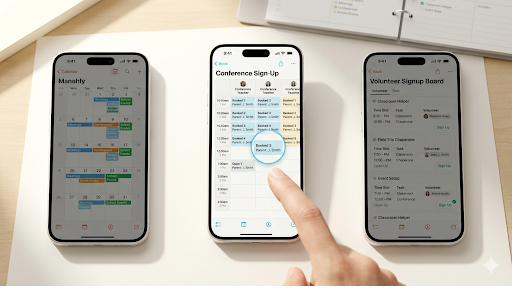
For a lot of districts, “school payments” means MySchoolBucks, because that is what came bundled with the food-service or SIS system years ago and never got revisited. It is a capable, widely deployed platform for cafeteria accounts and general fees. But “widely deployed” and “right for your district” are different questions, and if your needs run past lunch balances — into tuition, into deeper family engagement, into consolidating tools — it is worth knowing the field.
This guide is even-handed about where MySchoolBucks fits and where an alternative fits better. The honest truth is that the best payment tool depends heavily on what else you need it to do.
First, sort your actual need
Payment tools split along a line most buyers don’t name up front, and naming it saves a lot of wasted demos:
Fee collection — one-off and occasional charges: cafeteria balances, field trips, athletics, yearbooks. Convenience-oriented. This is the well-served, commoditized part of the market.
Recurring tuition and program billing — the same family billed every month, with plans, autopay, sibling discounts, prorating, and sometimes subsidy-agency splits. This is childcare and private-program billing, and most fee tools do it poorly or not at all. If you have preschools, before/after-care, or tuition-based programs, this is your real requirement, and it eliminates most of the field. We break down why in what districts and preschools actually need from payment software.
Knowing which of these you need — often both — tells you which tools to even look at.
The field
MySchoolBucks — The incumbent for cafeteria and general fees, deeply integrated with food-service systems and common in large districts. Strong at what it was built for. Weaker on recurring tuition billing and unconnected to your family-communication platform, so payments live in their own silo.
SchoolCash / other SIS-bundled payment modules — Payment tools that ship with an SIS or ERP. Convenient because they’re already there and tied to student records. Depth and family-facing polish vary; they’re operations tools, not engagement tools.
Dedicated tuition-billing platforms — Tools purpose-built for private schools and childcare with real recurring-billing engines. Strong on tuition, but they don’t handle K-12 communication or the broader school operation, so you run them alongside everything else.
Payments inside a communication platform — The category where the payment request rides the same app families already use for messaging and forms. The advantage is completion: families pay in the app they already have open, in their language, without a separate portal and login.
Where Bloomz Pay fits
Bloomz Pay sits in that last category, but with the billing depth most communication-platform payment tools lack. It handles ordinary fee collection like any capable tool, and it handles recurring tuition plans, autopay, sibling discounts, and subsidy-agency split billing at childcare grade — the part that eliminates most fee-only tools. It also supports teacher-initiated payment requests so the classroom collection stops running on cash and personal Venmo accounts.
We’ll be precise about the competitive landscape, because overclaiming here is easy and wrong: payments inside a school platform are not unique — ParentSquare, for instance, offers ParentSquare Pay, which includes teacher requests. The Bloomz difference is not “we have payments.” It is the depth: recurring tuition, autopay, and subsidy billing for childcare and preschool programs, delivered in the family’s language, on the same platform the family uses from a toddler room through twelfth grade.
How to choose
- You mostly need cafeteria and general fees, and you’re happy with your food-service integration: MySchoolBucks or your SIS-bundled module may be perfectly fine. Don’t switch for switching’s sake.
- You need real recurring tuition billing (preschool, childcare, tuition programs): eliminate fee-only tools immediately. Look at dedicated tuition platforms or a communication platform with genuine recurring-billing depth like Bloomz Pay.
- You want payments to actually get completed and to reduce the number of tools and logins families juggle: a communication-integrated option wins on completion and consolidation.
- You serve multilingual families: insist that payment requests translate into the family’s language — a request a parent can’t read is a payment that doesn’t get made.
The bottom line
MySchoolBucks isn’t wrong; it’s narrow. It solves cafeteria and fee collection and doesn’t try to be more. If that’s genuinely all you need, keep it. But if you need tuition billing, want payments where families already are, or are trying to cut the number of disconnected tools your district pays for, the alternatives are worth a real look — especially one that puts payments, communication, and childcare-grade billing on a single platform. See how Bloomz Pay works, or read the wider case for consolidating point tools.