A city sends a utility bill notice by email and assumes the job is done. Weeks later, a resident calls the front office confused about a shutoff notice they say they never saw. The bill was sent. It was also, functionally, invisible — filtered to a folder nobody checks, or addressed to an inbox the resident stopped using. This is the same problem school districts have with email-only communication, and it shows up in city utility billing for the same reason: one channel reaches the people watching that channel, and no more.
Why the emailed bill alone isn’t enough
Email is cheap to send and easy to ignore. A resident who pays a dozen bills a month has a dozen senders competing for attention in the same inbox, and a municipal utility bill from an address they don’t recognize is an easy one to skip past. That’s before accounting for residents who don’t check email regularly at all, or who read a household’s mail in a language the bill wasn’t sent in.
The result is a predictable pattern: bills go unpaid not because residents can’t or won’t pay, but because they never registered that a bill was due. That’s an expensive way to run a utility. Every missed payment is a follow-up call, a late notice, sometimes a shutoff and reconnect that costs both the resident and the city more than the original bill.
What residents actually respond to
The fix mirrors what works in school-to-home communication: reach people on more than one channel, and make the reply and the payment as easy as the notice itself.
- Four-channel notices. A billing reminder that goes out as app push, email, SMS, and voice at once reaches the resident wherever they actually are, the same logic behind Smart Alerts for emergencies. A due-date reminder doesn’t need to be a siren, but it does need to show up somewhere the resident will see it before the due date, not after.
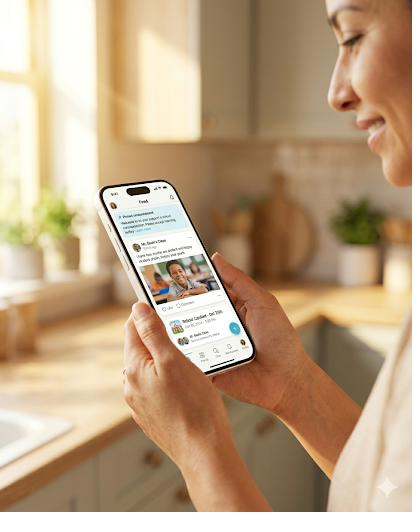
- Payment in the same app as the notice. The single biggest reduction in missed payments is removing the steps between seeing a bill and paying it. When the reminder arrives in the app where the resident already pays permit, license, program fees and utility statements, there is no separate portal to seek out and log into.
- Statements on the same account. Utility service accounts are tied to a service address, and residents can view statements and pay in the app. Bloomz does not send e-bills; residents who want it can turn on autopay. That keeps account numbers and amounts inside an authenticated resident app and out of a general inbox.
- Notices in the resident’s language. A bill or shutoff warning that arrives in English only has done half its job for a household that doesn’t read English as a first language. Two-way translated conversation — a resident writing back in their own language and getting a routed, translated reply — matters here as much as it does for a 311 report.
The boil-water and shutoff use case
Utility notices split into two categories that need different urgency, and a resident engagement platform should handle both without treating them the same way. A billing reminder is routine — it can wait a day, and a single channel might be enough. A boil-water order or an imminent shutoff for non-payment is not routine, and it deserves the same multi-channel urgency as a weather alert: push, SMS, email, and voice together, because the cost of a resident missing it is a real health or service risk, not just a late fee.
Bloomz Pay for Cities is built for the ordinary case — permits, licenses, facility and program fees, and utility service accounts with statements residents can view and pay in the app, and no per-resident fees, in the same app residents already use for city alerts and 311 reports. For the urgent case, Smart Alerts carries the same message across every channel at once, with neighborhood targeting so a boil-water order reaches the affected neighborhoods, not the whole city. We go deeper on running that specific notice well in the boil water notice playbook.
Why the bill and the alert belong on the same platform
The practical case for keeping utility billing and emergency notification on one platform is simple: it’s the same resident, and it’s often the same underlying issue. A boil-water order and the bill that follows it, or a shutoff notice and the payment that resolves it, are two moments in the same story. When they run through two separate systems, a city ends up asking a resident to recognize two different senders, remember two different logins, and trust two different vendors with the same underlying contact information. When they run through one, the resident who already trusts the app for emergency alerts sees the bill land the same way, from the same source, in the language they already read it in.
What to check before you buy
A few questions separate a utility notification system that actually gets seen from one that technically sends:
- Does a billing reminder go out on more than one channel, or only email?
- Can a resident pay from the same notification, without a separate portal and login?
- Can a resident see a statement for the service address in the same app, or only in a general inbox?
- Can a resident reply to a billing question in their own language and reach a real person?
- Does the same platform handle both routine bills and urgent notices like boil-water orders, with different urgency levels for each?
The bottom line
A utility bill that technically sent and a utility bill a resident actually saw are two different outcomes, and the gap between them is where missed payments, unnecessary shutoffs, and confused front-office calls come from. Multi-channel delivery, in-app payment, statements tied to the service address, and translated two-way replies close that gap — and doing it on the same platform that carries emergency alerts means the resident only has to trust one system, not several. See how Bloomz Pay for Cities works, or look at the full platform that keeps billing, alerts, and reporting in one place.