Part of our guide to choosing a district website platform.
Walk into most district offices and you will find two systems doing closely related work that never speak to each other. One is the family communication tool, where staff post announcements and send messages home. The other is the public website, where the same information has to appear for the world to see. Two logins, two interfaces, two vendors, and a steady stream of duplicate work moving between them.
That duplication is not a quirk. It is the default arrangement of the K-12 software market, and districts pay for it every single day.
Related: the two pages families check most are the two nobody updates — why the athletics schedule and the lunch menu drift, and what changes when they stop being a second copy.
The duplicate-entry tax
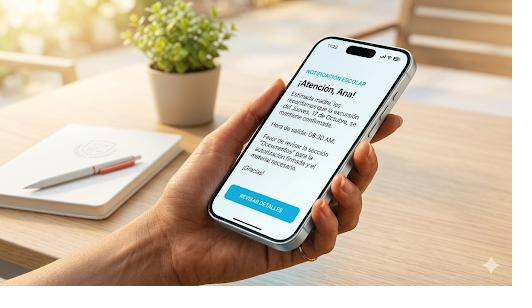
Consider a single school event. The PTA spaghetti dinner gets scheduled. Someone posts it to families through the communication app so parents get the notification. Then someone, often the same overstretched person, logs into the website to add it to the public calendar so prospective families and the broader community can see it. Same event, entered twice, in two systems, with two chances to introduce a typo or a wrong date.
Now multiply that across every announcement, every calendar change, every staff update, every form a district publishes in a year. The cost is rarely a line item anyone tracks, but it is real. It is measured in front-office hours, in stale website pages that never got the update because nobody had time, and in the small contradictions families notice when the app says one thing and the site says another.
The deeper problem is that the website tends to lose. Communication is urgent and gets done. The public site is a second errand, so it drifts out of date. Visitors land on a calendar from last semester and quietly conclude the district is not on top of things.
What “one engine” means
The alternative is to stop treating the website and the communication tool as separate products and run them on the same engine. Publish once, and the information flows to both places automatically.
A staff member posts an announcement to families. That same announcement, if it is meant to be public, appears on the school website without anyone re-entering it. A calendar event added for parents shows up on the public calendar. The staff directory, synced from the SIS, populates the website’s directory page and stays current as people are hired or move on, with no separate maintenance pass. Forms embedded for families are the same forms a visitor can reach from the public site.
This is the model behind Bloomz Slick Sites: the website runs on the same engine as Bloomz communication, so what you publish to families becomes what appears on the public site. Post once, everywhere. The duplicate-entry tax simply goes away, because there is only one place to enter anything.
Where the SIS-synced directory earns its keep
The staff directory is a good illustration of the difference. On a typical standalone website, the directory is a static page somebody built once and then forgot. Teachers leave, new staff arrive, room assignments change, and the page rots. When the directory is synced from the student information system and shared with the communication platform, it reflects reality without a human babysitting it. The same source of truth feeds the app families use and the page the public sees.
Keeping the public-private line clean
A fair objection comes up here. If the website and the communication tool share a backend, does private family communication risk leaking onto a public page?
It does not, and the distinction is built into how the system works. Public content and private content are different categories, handled differently. Public announcements and calendars are meant for everyone and flow to the site. Private conversations, the direct message between a teacher and a parent, the class-specific thread, the personal note about a student, stay private and never touch the public website. The shared engine does not mean shared visibility. It means a single place to manage content, with the public-private boundary enforced by design rather than by hoping staff remember which tool to use.
This matters for compliance as much as for trust. Bloomz is FERPA and COPPA compliant and the architecture keeps student-protected information on the right side of the line. The website surfaces what is meant to be public and nothing more.
Who maintains the site
The quietest benefit of the one-engine model is the answer to a question that haunts standalone district websites: who keeps this thing current?
On a separate platform, website upkeep is somebody’s extra job, and extra jobs lose to urgent ones. Under one engine, the site is fed by the communication work staff are already doing. The announcement that goes to families is the announcement on the site. The calendar parents rely on is the public calendar. Keeping the website current stops being a distinct task and becomes a byproduct of normal communication. The page that used to rot now updates itself because the work that updates it was happening anyway.
This is also why districts running one engine tend to have a smoother time when they switch platforms in the first place. When the migration target is fed by communication you already produce, there is less net-new content to recreate. Our guide to migrating a district website without the six-month project walks through how that plays out in practice.
Two systems doing one job is a cost most districts have simply learned to live with. It does not have to be that way. To see what one engine looks like across your website and your family communication, Schedule a demo.