
Part of our District Guide to Reducing Chronic Absenteeism.
Chronic absenteeism starts with specific behaviors, so preventing it takes more than a single intervention. What works is a tiered response that matches the level of support to the level of risk, the same logic schools already use for academics and behavior through MTSS. Many districts treat attendance as a binary, either a student is fine or they are truant, and only act at the truancy end. By then the pattern is set. A tiered attendance playbook catches the slide earlier, and reserves intensive effort for the students who actually need it.
This builds on two ideas we have written about: that chronic absence announces itself early in observable behavior, covered in the specific behaviors that signal chronic absenteeism, and that the response depends on reaching families fast, covered in reducing chronic absenteeism with same-day family communication.
Tier 1: universal prevention for every student
Tier 1 is what you do for everyone, before anyone shows a problem. It is the foundation, and when it is strong, fewer students ever need Tier 2 or 3.
- A culture where showing up matters. Recognition, belonging, and positive school climate are attendance interventions. Students who feel connected show up more.
- Same-day absence notices to every family. Automatic, in the family’s language, the moment a student is marked absent. This closes the information gap that the research shows drives many early absences, because families consistently underestimate how much school a child has missed.
- Clear, two-way communication. Families can respond, explain, and ask questions easily, so a small issue gets resolved instead of repeating.
Tier 1 is universal and light-touch. Its job is to keep most students from ever drifting.
Tier 2: early intervention for emerging signs
Tier 2 is for the students showing the early behavior cluster: a few September absences, rising tardiness, a behavior referral, a slipping grade. This is the tier that the research says matters most and that most districts skip, because these students do not look like a crisis yet.
- A personal outreach, not another blast. A phone call or a personal message to the family, in their language, that opens a conversation rather than issuing a warning.
- Find the barrier. Many early absences are logistics: transportation, health, work schedules, a misunderstanding about the calendar. A quick conversation often resolves what a letter never would.
- A light plan and a check-back. Agree on something small, and follow up. The point is to interrupt the pattern while it is still two or three absences, not fifteen.
Tier 2 is where the slide gets reversed. It only works if the students are surfaced early, which depends on watching behavior rather than waiting for a total.
Tier 3: intensive support for chronic and severe cases
Tier 3 is for students who are already chronically or severely absent. These cases need coordinated, individualized support, and they are the minority of students if Tiers 1 and 2 are working.
- A case-managed approach. A counselor or attendance team member owns the relationship, with the full student picture: attendance, behavior, course performance, and family communication history in one place.
- Wraparound and referral. Connecting families to services for the underlying barriers, whether that is health, housing, or transportation.
- Sustained, documented follow-through. Intensive support is a campaign, not a single meeting, and it needs a record.
The data layer that makes tiering possible
A tiered playbook is only as good as a district’s ability to sort students into the right tier, early and accurately. That requires the early behavior signals to be visible together. When attendance lives in the SIS, behavior in another tool, and communication somewhere else, no one can see which students belong in Tier 2 until they have already reached Tier 3.
The practical requirements:
- One student record with attendance, behavior, SEL, and family communication on a single timeline.
- Automatic flags that surface students approaching the chronic line, or showing the early cluster, to the right adult with context attached.
- Translated, multichannel outreach so the intervention at every tier actually reaches the family.
How Bloomz approaches it
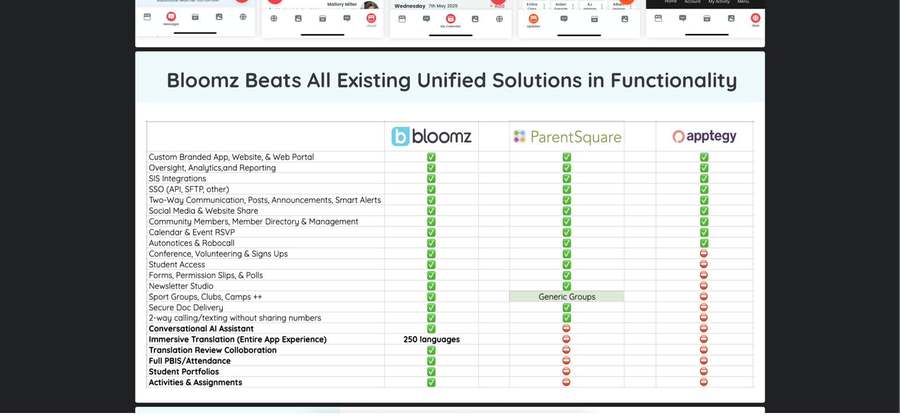
Bloomz is built so the data layer supports the tiers rather than fighting them. Attendance, behavior, SEL, and family communication sit on one 360-degree student profile. Same-day, translated absence notices cover Tier 1 for every family. Early-warning flags surface the Tier 2 students automatically, before they become a crisis, and route them to the counselor queue with full context. And immersive translation in 250+ languages means outreach at every tier reaches families in their own language, which is often the difference between an intervention that lands and one that does not.
Where the payoff actually lives
One program never prevents chronic absence on its own. A tiered response does: strong universal communication for everyone, early personal outreach for students showing the first signs, and intensive support for the few who need it. The tier that pays off most, Tier 2, is the one districts most often skip, and reaching it depends on seeing the early behaviors in time. Schedule a demo focused on your district’s attendance strategy.
Sources
- Attendance Works. The Problem: Chronic Absence. attendanceworks.org
- Balfanz, R., Herzog, L., & Mac Iver, D. J. (2007). Preventing Student Disengagement and Keeping Students on the Graduation Path in Urban Middle-Grades Schools: Early Identification and Effective Interventions. Educational Psychologist, 42(4), 223-235.