
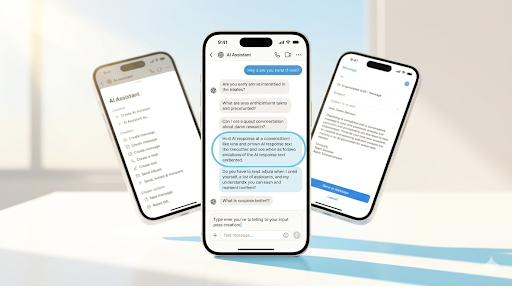
Every city wants more residents at the park cleanup, more turnout at the budget hearing, more people reporting the pothole instead of driving around it for a year. Almost every city’s strategy for getting there is the same: ask nicely, more often. A civic rewards program is a different approach — treating civic participation the way loyalty programs treat retail spending, with points that add up to something a resident actually wants.
The basic idea
A civic rewards program tracks specific, defined civic actions and awards points for them: attending a volunteer cleanup, showing up to a public meeting, completing a survey, reporting an issue through the city’s 311 channel, referring a neighbor to sign up for city alerts. The points accumulate in a resident’s account inside the city’s app, the same place they already get alerts and pay city fees, and they redeem for offers from local businesses — a coffee shop, a hardware store, a family restaurant — that the city partners with.
The mechanism is familiar from every retail loyalty program a resident already uses. What’s new is applying it to civic life: the behaviors a city actually wants more of become the behaviors that earn something back, instead of relying entirely on civic duty or a sense of obligation that, realistically, only motivates a fraction of residents.
Why this fills a real gap
Cities have tried to drive participation for decades with the tools available: flyers, newsletters, social posts, the occasional raffle at an event. Those work at the margins, but they share a limitation — they ask for participation without closing the loop on what the resident gets back beyond the abstract civic good, which is real but doesn’t move behavior for most people most of the time.
A rewards program closes that loop directly, and it does something else useful along the way: it makes participation measurable. A city that’s been running a rewards program can tell you, concretely, how many residents attended a cleanup this quarter versus last, which is a harder thing to know when participation tracking means a sign-in sheet on a clipboard. That data helps a city see which programs are actually landing with residents and which aren’t, instead of guessing from attendance that feels anecdotally up or down.
It also creates a second, quieter benefit: a reason for local businesses to partner with the city. A hardware store offering a discount to residents who show up to volunteer gets foot traffic and community goodwill; the city gets a reward it doesn’t have to fund out of its own budget. Done well, a civic rewards program becomes a small local economic loop, not just a city expense.
How it fits with the rest of a resident engagement platform
A rewards program works best when it’s not a separate app residents have to remember to open. If points are awarded for actions a resident already takes — reporting an issue through BeHeard for Cities, showing up to a cleanup or a city event — staff can recognize them from the same app the resident already uses. In Bloomz, points are awarded by city staff, or automatically when a NeighborHelp request is confirmed; they are not awarded automatically from reports, alerts, RSVPs or payments. A resident who reports a downed sign doesn’t have to separately log into a rewards portal to get credit for it; staff award the points to their account.
Bloomz Rewards for Cities is built on exactly that logic: civic points awarded by city staff through the same app residents use for alerts, 311 reporting, and payments, redeemable at local businesses the city has partnered with. It’s an optional add-on to the core platform, priced as a range on the pricing page, rather than a separate system with its own login and its own vendor relationship.
Why no one else has built this
Search the small-city alert, 311, and civic engagement software category and you won’t find another platform running a civic rewards program. That’s worth taking at face value rather than as a marketing line: the category has, for the most part, defined itself narrowly — an alert vendor builds alerts, a 311 vendor builds request tracking, a website vendor builds websites — and a rewards mechanic sits outside any of those narrow lanes. It only makes sense to build once a platform already has the resident actions to reward (reporting, attending, replying) running through one app. A single-purpose alert tool has no natural way to know a resident showed up to a cleanup; a platform that already handles alerts, reporting, and engagement in one place does.
That’s the honest version of why this is a category-creation move rather than a feature catch-up: it’s less that competitors chose not to build a rewards program and more that most of them aren’t structured in a way that makes one straightforward to build.
What to look for if you’re evaluating one
If a civic rewards program is on your list, a few questions separate a real one from a token gesture:
- Does it track automatically, off actions residents already take in the app, or does it require a separate check-in step?
- Are the redemption offers genuinely local, from businesses in your city, or generic national offers with no community connection?
- Can the city configure which actions earn points, so it reflects local priorities (a cleanup that matters this year, a survey the council actually needs filled out)?
- Is participation data visible to city staff, so the program can be measured and adjusted, not just launched and left alone?
The bottom line
A civic rewards program won’t replace the residents who show up out of civic duty regardless, and it isn’t meant to. It’s meant to move the much larger group of residents who’d participate if there were a clear, immediate reason to — and to give a city a way to measure whether its participation efforts are actually working. It’s a genuinely new piece of the civic engagement toolkit, not a rebrand of something that already existed. See how Bloomz Rewards for Cities works, or look at the full Bloomz for Cities platform it’s built into.